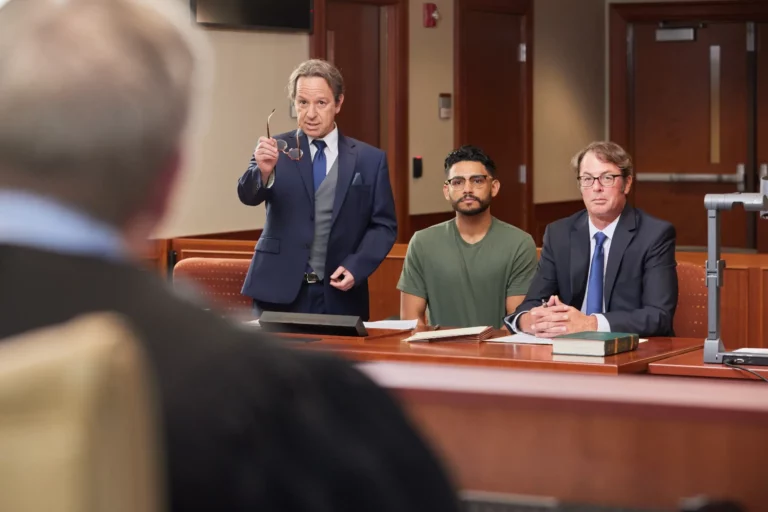





If you are charged with a felony or held in custody, your first court appearance in Wake County is an early procedural hearing, not a trial. A district court judge informs you of the charges, makes sure you understand your right to an attorney, and reviews the conditions of your release. If the charge is a felony, the judge also schedules a probable cause hearing. If you were released on a misdemeanor, your first court date works differently, as explained below. Guilt or innocence is not decided that day, but how you prepare for it still matters.
If you have never been inside a courtroom, the days leading up to that first date can feel overwhelming. You may not know where to go, what to say, or what the judge expects of you. At Kurtz & Blum, our criminal defense team has spent decades in Raleigh courtrooms, and we have walked many first-time clients through this exact moment. Here is what you can expect.
What a First Court Appearance Is For
In North Carolina, the first appearance is governed by N.C. Gen. Stat. 15A-601. Its purpose is to make sure the case starts properly and that your basic rights are protected from the beginning.
Who must appear and when depends on the charge and whether you are in custody. A person charged with a felony must be brought before a district court judge. A person charged with a misdemeanor goes before a district court judge for a first appearance only if they are being held in custody. For someone in custody, the law requires the first appearance within 72 hours, or within 96 hours if the courthouse has been closed for more than 72 hours, or at the next regular session of district court, whichever comes first. If you were released before then, your first appearance is generally held at the next session of district court in the county.
For many misdemeanor charges, including most DWI cases, there is no separate first appearance before a judge once you have been released. Instead, your first court date is a district court session where your case is called. An arraignment in North Carolina district court, where the charge is formally read and a plea is entered, may take place at that session or a later one, and your attorney may ask for more time to review the evidence before then.
Many people have already seen a magistrate before this hearing. The magistrate typically sets the initial conditions of release shortly after an arrest. The first appearance before a judge is a separate step that follows.
Walking Into the Wake County Justice Center and What to Expect
Criminal matters in Wake County are handled at the Wake County Justice Center, located at 300 S. Salisbury Street in downtown Raleigh. Civil matters are generally heard at the separate Wake County Courthouse, so it is worth confirming you are headed to the right building.
Expect a busy morning. Many cases are usually scheduled for the same session, and you may wait some time before your name is called.
Your paperwork should show the date, time, and courtroom for your appearance. If anything is unclear, ask your attorney before the day arrives.
What the Judge Will and Will Not Decide That Day
At the first appearance, the judge’s role is limited and specific. Under North Carolina law, the judge will:
- Inform you of the charges against you
- Confirm that you or your attorney has received a copy of the charging documents
- Determine whether you have an attorney and, if you do not, explain your right to counsel and that an attorney will be appointed if you cannot afford one, as set out in N.C. Gen. Stat. 15A-603
- Review your eligibility for pretrial release and the conditions that apply
- For a felony, schedule a probable cause hearing unless you waive it in writing
What the judge will not do is decide whether you are guilty. There is no trial at a first appearance, and it is not the time to tell your side of the story. Anything you say in open court can be heard by the prosecutor and others in the room, which is why we encourage clients to let their attorney do the talking.
One detail many people find reassuring: you cannot waive the first appearance itself, but if you are represented by counsel, you do not always have to be there in person. Your attorney can advise whether your attendance is needed for your specific case.
How to Prepare and How to Conduct Yourself
A little preparation goes a long way toward making the day less stressful.
Bring your paperwork. Keep every document you received at the time of arrest or release, including your release order and any citation or warrant, and bring them with you.
Arrive early. Allow time for parking, security screening, and finding your courtroom. Arriving late can create problems you do not need.
Dress respectfully. You do not need a suit, but clean, conservative clothing shows the court you are taking the process seriously.
Stay calm and quiet. Do not discuss your case in hallways, elevators, or on your phone. You never know who is listening.
Follow your release conditions. If the court ordered no contact with someone or set other conditions, follow them exactly. Violations can lead to new consequences and make your case harder to defend.
Talk to your attorney first. The most valuable preparation is a conversation with your lawyer before the hearing, so you know exactly what will happen and what, if anything, you need to say. Our page on whether to talk to police covers a related question many clients have early in a case.
Why Local Courtroom Familiarity Makes a Difference
The law is the same across North Carolina, but every courthouse has its own rhythm. Knowing how a Wake County courtroom runs, how the calendar is called, and what to expect from local procedures helps an attorney set realistic expectations and position a case correctly from the first day.
Kurtz & Blum has represented clients in Raleigh since 1998, and our attorneys bring more than 50 years of combined legal experience to every case. Our downtown Raleigh office on Fayetteville Street is close to the Justice Center, and our team approach means your case is reviewed by multiple attorneys who look at it from different angles. You can learn more about our firm and how we work.
Every case is different, and no attorney can promise a particular result. What we can promise is honest advice, careful preparation, and a team that is in your corner from day one.
Get Ready for Court With a Team Behind You
Facing your first court date is stressful, but you do not have to walk into the Justice Center alone or unprepared. The earlier you have an attorney involved, the more options you are likely to have.
If you or someone you care about has an upcoming court date in Wake County, schedule a consultation with our criminal defense team. We will explain what to expect, protect your rights, and help you plan your next steps.
Frequently Asked Questions
What happens at a first court appearance in North Carolina?
A district court judge informs you of the charges, confirms you have received the charging documents, addresses your right to counsel, and reviews your conditions of release. For felony charges, the judge also schedules a probable cause hearing unless you waive it. Guilt or innocence is not decided at this stage.
Do I need a lawyer at my first court appearance?
It is strongly advisable. An attorney helps protect your rights, makes sure you understand what is happening, and positions your defense properly from the first stage. If you are represented, your attorney can also advise whether you need to attend in person.
Will I be able to go home after my first appearance?
In many cases, yes, depending on the charge and the conditions of release that apply. The judge reviews your eligibility for pretrial release at the first appearance, and an attorney can advocate on your behalf regarding those conditions.
Where do first appearances happen in Wake County?
Criminal matters in Wake County are handled at the Wake County Justice Center, located at 300 S. Salisbury Street in Raleigh. Check your paperwork for the exact courtroom and time, and arrive early to allow for security screening.
What should I bring or prepare for my court date?
Bring all paperwork you received, including your release order and any citation or warrant. Dress respectfully, arrive early, and speak with your attorney beforehand so you know what to expect. Preparation reduces stress and helps the appearance go smoothly.