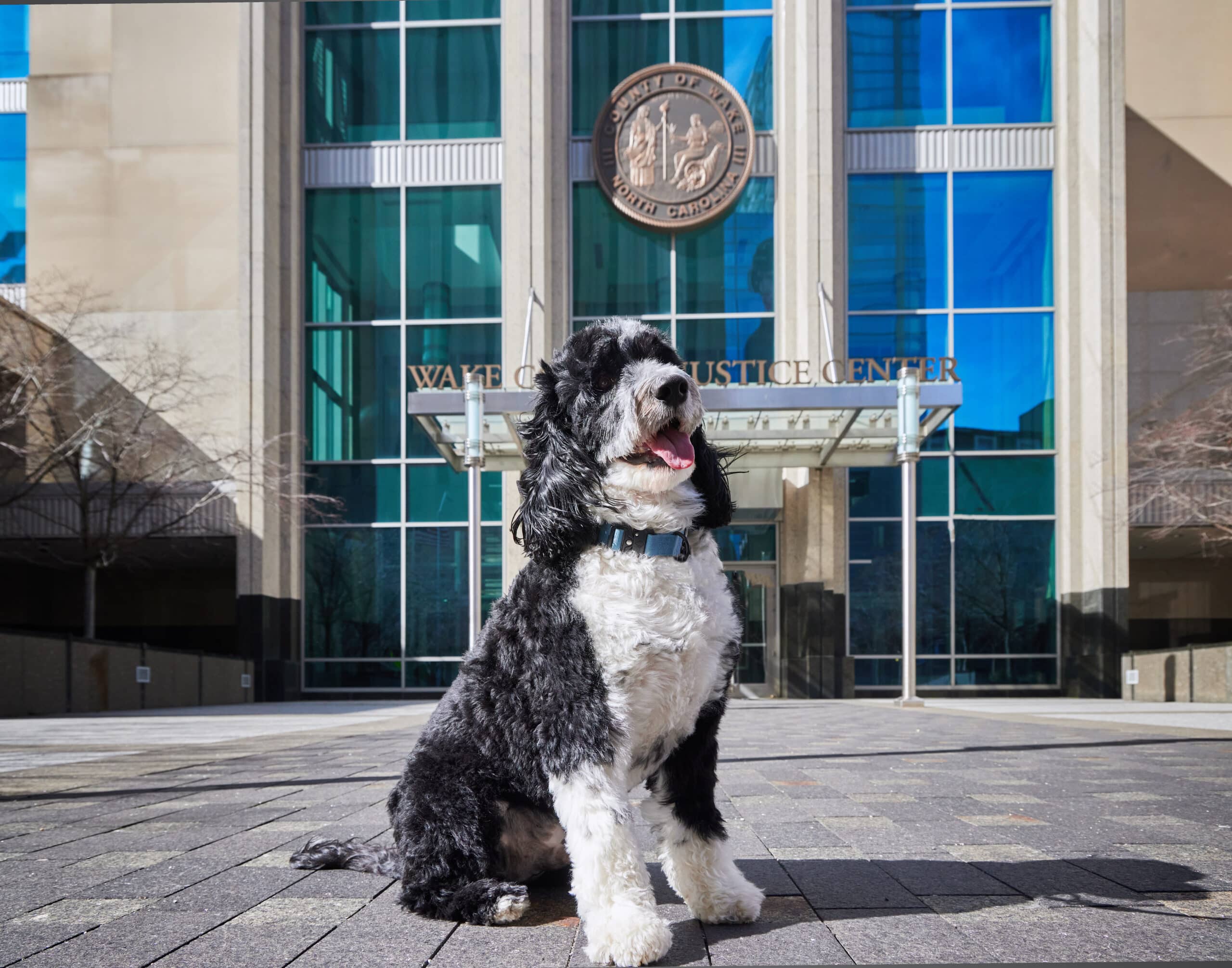
Our criminal defense attorneys help people throughout Wake County, North Carolina. We frequently handle offenses arising out of the following cities: Knightdale, Rolesville, New Hope, Apex, Holly Springs, Fuquay-Varina, Raleigh, Wake Forest, Garner, Cary, Morrisville, Wendell and Zebulon.
What should I do if I’m arrested in NC?
If you’re arrested in North Carolina, the most important thing to do is ask to speak with an attorney immediately. Do not answer any questions beyond providing basic identifying information, such as your name and address.
Stay calm, assert your right to remain silent, and wait to speak with a lawyer before discussing anything about your case.
Fight the urge to explain. The police are not your friends, not reasonable, not searching for the truth. Their job is to get convictions.
Can I be charged with a crime if I didn’t know I was breaking the law?
Yes. In North Carolina, ignorance of the law is not viewed as a valid defense.
It is important to consult an attorney if you find yourself in this situation to understand your rights and options.
Can I go to jail or prison?
North Carolina law sets specific guidelines for who can face jail or prison time. Some offenses require mandatory jail time, while others may be resolved with probation, fines, or alternative sentencing. Your prior record also plays a big role in sentencing.
A criminal defense attorney can assess your case, explain the possible outcomes, and fight to keep you out of jail whenever possible.
How does bail work in NC?
In North Carolina, bail serves two main purposes: protecting the public and ensuring that you appear in court. To reduce your bail amount, it’s helpful to show the magistrate or judge that you have strong community ties and are not a danger to yourself or others.
If you pay the full bail amount directly (without using a bondsman), you will get your money back at the end of your case, regardless of the outcome. However, if you use a bondsman, their fee is non-refundable.
What happens if I miss a court date in NC?
If you miss a court date in North Carolina, the consequences vary based on the nature of your charge.
For more serious offenses, the court will issue a warrant for your arrest. In traffic or lower-level cases, your license may be suspended, and your case may be marked as “called and failed” or changed to “dismissed with leave” status.
In many cases, the prosecutor may require you to plead guilty before allowing the case to move forward. It’s essential to address a missed court date promptly to avoid additional legal complications.
Can’t I just go into the courtroom and talk directly to the prosecutor?
Yes—you can walk into court and talk to the prosecutor. But should you? Absolutely not.
The prosecutor’s job isn’t to help you, it’s to build a case against you. They’re not your ally, and they won’t stop you from saying something that could be used against you. Anything you say can and will be used to strengthen their case.
A skilled defense attorney ensures that your rights are protected, negotiates on your behalf, and fights for the best possible outcome. When your future is at stake, you need someone in your corner—not across the courtroom from you.
The police officer said she would tell the judge I was cooperative – will that help?
Cooperating with the police can sometimes help, but it’s not guaranteed. In many North Carolina courts, the arresting officer isn’t even present unless your case goes to trial. That means their opinion may not influence the judge or prosecutor.
At Kurtz & Blum, we conduct a thorough investigation to ensure that any favorable witnesses—whether officers or others—are called when it matters most.
What’s the difference between a misdemeanor and a felony in NC?
The main difference between a misdemeanor and a felony in North Carolina is the severity of the offense and the consequences. Felonies typically carry more severe penalties, including longer prison sentences and lasting legal consequences.
One of the most significant differences is that a felony conviction can impact your individual rights—for example, your right to own or possess a firearm. Other than domestic violence cases, most misdemeanors do not affect your firearm rights.
Also, being convicted of a felony carries a social stigma that can affect employment and other aspects of life, making it essential to understand the potential impact of your charges.
What if this is just a misdemeanor charge? Can’t I plead guilty?
Yes, you can plead guilty—but should you? A misdemeanor conviction can stay on your record forever and impact your future in ways you may not expect.
In North Carolina, nearly all criminal convictions are permanent. Even a minor misdemeanor—like trespassing—will show up on background checks for life. A conviction could also mean:
- Losing eligibility for federal college grants (for drug-related offenses).
- Being banned from owning a firearm (for misdemeanor domestic violence).
- Having to disclose a criminal record on job applications limits career opportunities.
A skilled attorney can often reduce, dismiss, or negotiate a better outcome for your case, helping you avoid unnecessary damage to your future. Before you plead guilty, make sure you know all your options.
Why should my old criminal record matter? My old charges were a long time ago – they won’t count against me, will they?
Your old criminal record can still matter, even if the charges were years ago. Prior offenses can affect sentencing, plea deals, and even job opportunities. That’s why having an experienced defense attorney is crucial—we work to minimize the impact of your past and make sure the court sees who you are today, not just who you were then.
At Kurtz & Blum, we understand that past mistakes don’t define you. Whether your record involves youthful mistakes, addiction, or other challenges, we fight to ensure it doesn’t unfairly shape your future.
Will I have a criminal record if I’m charged but not convicted?
Yes. In North Carolina, a criminal charge becomes part of your public record even if you are not convicted.
Once you are charged with a criminal offense, the record becomes publicly accessible. It will stay on your record until you take steps to have it expunged.
What’s the difference between a dismissal and an expungement?
A dismissal means the charges against you are dropped, but the record of your arrest and charge still exists. This can happen if the prosecutor decides the case isn’t strong enough or if you complete community service, treatment programs, or other conditions. Even with a dismissal, a background check may still show that you were charged, though it will also show that the case was dismissed. Importantly, a dismissal means there is no criminal conviction on your record.
An expungement, on the other hand, erases all traces of the charge as if it never happened. Court and police records are destroyed, making them invisible to background checks. North Carolina law typically allows only one expungement in a lifetime, so if you have other dismissed cases later, those dismissals may still appear on your record.
Can I get a criminal charge expunged in NC?
It depends. Certain charges may qualify for expunction under North Carolina law. A charge is an accusation of wrong doing. A conviction is a criminal charge for which someone has pleaded guilty or been found guilty. A dismissal is a charge that was dropped or where the accused is found not guilty. Some recent dismissals are eligible for automatic expunction, but the process is not always consistent or quick. Older ones require a court order.
In some situations, you might have to submit a petition to get the dismissed charges expunged. A lawyer can assist you through this process and make sure your record is accurately updated.
What are my rights during a police stop in NC?
In such situations, you always have the right to remain silent. However, if you are pulled over while driving, the police have the right to temporarily detain you, ask you to step out of the vehicle and request your driver’s license, registration, and proof of insurance.
It’s important to stay calm, follow instructions, and politely assert your right to remain silent if asked to provide more than your identification and documentation.
Do not agree to a search. If the police ask your permission, it’s because they don’t have the right to do what they are asking to do.
Do I have to talk to the police if I’m being questioned?
No. Other than providing your name and identifying information, you are not required to answer police questions.
You have the right to remain silent, and you should exercise that right until you have spoken with an attorney.
Can the police search my car without a warrant in NC?
Yes. Law enforcement may search your vehicle without a warrant if they have probable cause to believe it contains evidence of a crime.
Examples include the smell of illegal substances, visible contraband, or other indicators that suggest criminal activity. However, without probable cause, a warrant or your consent is generally required.
What if I’m not sure I want to hire an attorney?
Not sure if you need an attorney? That’s okay—the best way to decide is to talk to one.
At Kurtz & Blum, we offer detailed consultations. You’ll meet with an experienced criminal defense attorney who will review your case, explain the law in simple terms, and walk you through your options. No pressure, no obligation—just the information you need to make the right decision.
What should I expect from a criminal defense attorney?
A good criminal defense attorney should do more than just show up in court—you should expect clear communication, legal expertise, and a strategy tailored to your case.
- Keeping You Informed – You deserve to understand your charges, possible defenses, and all legal options. No attorney can guarantee an outcome, but they should ensure you’re never in the dark about what’s happening and what’s at stake.
- Legal Knowledge & Local Insight – While North Carolina criminal law is the same statewide, each judicial district operates differently. A strong defense attorney knows not just the law but also how local prosecutors and judges handle cases.
- Team-Based Advantage – At Kurtz & Blum, PLLC, you don’t just get one lawyer—you get the experience of an entire legal team. With multiple criminal defense attorneys focused on a few key counties, we know these courthouses inside and out, giving you the advantage of experience and local knowledge.
Has the attorney handled a case like mine before?
At Kurtz & Blum, our criminal defense attorneys have handled everything from misdemeanor drug charges to first-degree murder—and nearly everything in between. With experience in multiple counties and federal court, there’s a strong chance we’ve worked on a case like yours.
That said, every case is unique. We develop strategies tailored to your specific situation, ensuring the best possible defense.
When you hire us, you’re not just getting one attorney—you’re getting the combined knowledge and experience of our entire legal team. We collaborate, analyze legal nuances, and build the strongest possible defense for trial or negotiation.
Why do your services cost more than some other attorneys I’ve talked to?
We’re not the cheapest attorneys in town—because we offer more than just legal representation. At Kurtz & Blum, you’re paying for experience, knowledge, and a team that’s always there when you need us.
Our firm has multiple criminal defense attorneys with decades of combined experience. We don’t just know North Carolina law—we know how cases are handled in different counties, and that insight can make all the difference in your defense.
Unlike solo attorneys, we have a team-based approach, meaning that if your attorney is unavailable due to an emergency, another experienced lawyer will be ready to step in. Your case won’t be left waiting.
We provide the resources of a larger firm while still giving you the personal attention you deserve. When your future is on the line, cutting corners isn’t an option. Some things are worth the investment—your defense is one of them.
Can you give me a price quote over the phone?
For simple traffic violations like speeding or seatbelt tickets, we can usually provide a price quote over the phone. But for more serious criminal charges, we prefer to meet in person. Every case is different, and our fees depend on the complexity of your situation and the work involved. An in-person consultation allows us to understand your case fully while protecting your privacy.
Our initial consultation is free, and there’s no obligation. Just bring any relevant paperwork—such as your charge, warrant, or release conditions—so we can assess your case accurately. Contact us to schedule a time that works for you.