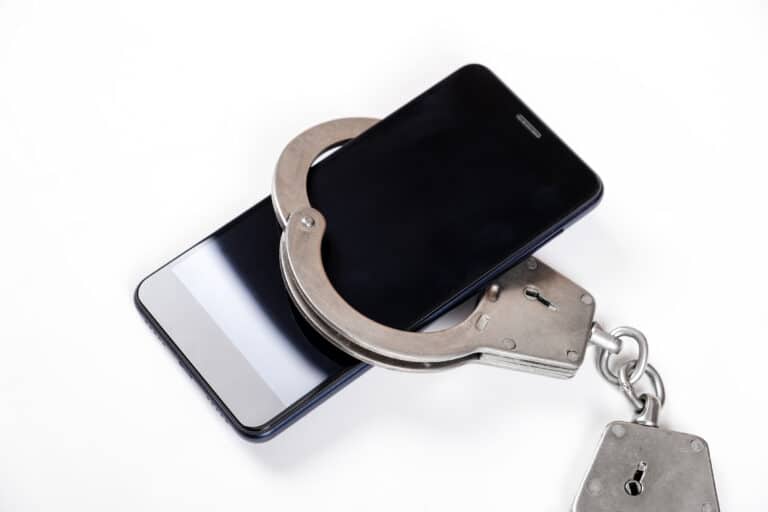
Today, people live on their phones. We keep our photos, texts, banking apps, and social media all in one place. That makes a phone one of the most personal items you own, often carrying far more sensitive information than a wallet, purse, or even your home computer.
What happens if law enforcement gets involved? If you’re suddenly facing an arrest in NC, one of the first questions that comes to mind is simple but urgent: Can police search your phone?
Unlike your bag or car, a phone isn’t just another item you carry. It’s a record of your private life, and the law treats it differently. Understanding where police authority ends and your rights begin can make a real difference if you’re ever under arrest in North Carolina.
Do Police Need a Warrant to Search Your Phone?
In most situations, the answer to the question “Can police search your phone?” is no. At least not without a warrant.
This rule comes from the U.S. Supreme Court’s 2014 decision in Riley v. California, a landmark case that recognized just how much private information our phones hold. The Court made it clear: cell phones are different from other personal belongings, and the Fourth Amendment protects them from routine searches after an arrest.
What does that mean in practice? If you are facing an arrest in NC, officers may search your pockets or parts of the car you were traveling in. When it comes to your phone, though, they must get a judge’s approval first.
Without a valid warrant or your consent, any search of your phone’s data is generally a violation of your constitutional rights.
How Does This Law Apply in North Carolina?
The U.S. Supreme Court’s ruling in Riley v. California is binding across the country, and North Carolina is no exception. Here, courts have recognized that cell phones deserve the same strict protection, which means police generally need a warrant before accessing the contents of your device.
In practice, if you’re under arrest in NC, officers may secure your phone as evidence, but that doesn’t give them the right to scroll through your messages or photos on the spot. Instead, they must present a judge with enough reason to believe the phone contains evidence of a crime. Only after a judge issues a warrant can police legally search your phone’s data.
This distinction matters because it shows that even in stressful situations, like being arrested in Raleigh or elsewhere in the state, you still have strong privacy rights that protect your digital life.
Are There Any Exceptions to the Warrant Requirement?
While the general rule is that police need a warrant, there are a few exceptions. These exceptions are limited, but they can still come into play during an arrest in NC:
- Consent: If you agree to let officers look through your phone, they don’t need a warrant. That’s why it’s important to know you have the right to say no.
- Exigent circumstances: If police believe evidence on your phone could be destroyed quickly, like a text being deleted or data being remotely wiped, they may argue that an immediate search is necessary.
- Plain view or unlocked phones: If your phone screen shows something visible while an officer is lawfully near you (for example, a text notification that appears during the arrest), they may note it. Yet, scrolling through your apps, photos, or messages still requires a warrant, even if your phone is unlocked.
So, can police search your phone without a warrant? Only in these narrow situations. Otherwise, courts have made it clear that your digital privacy deserves strong protection.
What Should You Do If You’re Arrested?
If you’re facing an arrest in NC, it’s important to remember that your phone is not just another item police can freely search. Unless one of the narrow exceptions applies, officers generally need a warrant. That means you have the right to say no if asked for consent.
At the same time, you should avoid taking matters into your own hands. Trying to delete messages or wipe your device during an arrest could create serious legal problems. The safest step is to remain calm, assert your rights respectfully, and speak with a defense attorney as soon as possible.
So, when people ask, “can police search your phone?” the practical takeaway is this: in almost every case, they can’t do so without first getting a judge’s approval. Knowing this can help you protect your privacy and avoid giving up rights you still have, in Raleigh or anywhere else in North Carolina.
What Happens if Police Search Your Phone Without a Warrant?
When police look through a phone, they don’t just see evidence tied to an arrest. They may also uncover private details about your family, finances, health, or social life. These things were never meant to be part of a criminal case.
If that search happens without a warrant, your attorney may be able to challenge the evidence in court. Still, you need to know that fighting an illegal phone search takes time, resources, and legal skill. In the meantime, sensitive information may already have been exposed.
That’s why understanding your rights matters. Protecting your phone from an unlawful search isn’t only about evidence. It’s about safeguarding the most personal parts of your life.
Let’s Protect Your Rights in a Digital World
Your phone holds your private life, like messages, photos, banking, and more. That’s why the law treats it differently. During an arrest in NC, police may check your pockets or car, but when it comes to your phone, the answer to “can police search your phone?” is almost always no, unless a warrant or a rare exception applies.
Yet these situations are stressful, and many people make an unintentional but costly mistake by letting police check their phones.
If you were arrested in Raleigh, Cary, or the surrounding areas in North Carolina and officers searched your phone without a warrant, your rights may have been violated. At Kurtz & Blum, our criminal defense team knows how to challenge unlawful searches and fight to keep illegally obtained evidence out of your case.
Protecting your privacy starts with knowing your rights and having an experienced attorney on your side.